
In the global food industry, the distance between a farm and a finished product can span continents. Everything that happens along that journey shapes the safety, quality, and integrity of what ends up on your customers' shelves.
What Does it Mean to "Invest at Origin"?
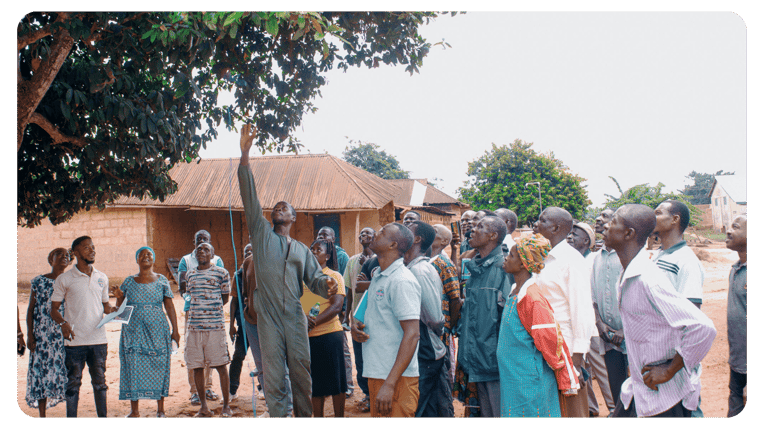
When we talk about investing at origin, we mean a supplier that doesn't simply place purchase orders from the comfort of a distant office. True investment at origin means having a meaningful, sustained presence in the regions where raw materials are grown, harvested, and first processed.
This can take many forms: employing local agronomists and quality inspectors, funding training programs for growers, investing in community infrastructure, or maintaining physical operations in source countries. What unites all of these approaches is a shared commitment: the supplier's success is tied directly to the success of the farmers, communities, and ecosystems at the beginning of the supply chain.
For food and ingredient buyers, this distinction matters more than it might seem. The supplier sitting across from you at a trade show is only as reliable as the relationships and investments they have in place thousands of miles away.
Why it Matters for Your Business
The food industry is under increasing scrutiny from regulators, retailers, and consumers. The expectation for transparency and accountability throughout the supply chain has never been higher. Choosing a supplier who genuinely invests at origin delivers concrete advantages across nearly every dimension of your sourcing strategy.
Food Chain & Supply Chain Transparency
Food safety incidents rarely emerge from nowhere. They develop gradually through poor agricultural practices, inadequate storage conditions, inconsistent hygiene protocols, or the use of inputs that are never properly monitored. A supplier with true investment at origin can intervene at each of these stages because they are present when and where it counts.
On-the-ground teams can audit growing conditions, enforce Good Agricultural Practices (GAP), and verify traceability documentation in real time. This proximity translates directly into shorter response times when issues arise, more granular visibility into product provenance, and stronger documentation for regulatory compliance. For buyers navigating FSMA requirements, EU import regulations, or retailer-specific auditing standards, a supplier embedded at origin is an asset that pays for itself.
Consistently Better Product Quality
Quality is shaped by decisions made long before a product reaches your dock. Varietal selection, harvest timing, drying methods, sorting protocols, moisture management — these are all determined at origin, and they are all areas where supplier involvement makes a measurable difference.
Suppliers who work closely with growers can influence these decisions, set meaningful specifications, and reject substandard material before it enters the processing stream. The result isn’t just a product that meets spec more often, but rather a more consistent baseline of quality across seasons and lots. For manufacturers and food brands where ingredient consistency directly affects end-product performance, this reliability is not a luxury; it is a competitive necessity.
Real-Time Market Intelligence
Global commodity markets for food ingredients can shift rapidly from a variety of factors such as weather, regional policy changes, currency fluctuations, pest pressures, or geopolitical disruption. A supplier with personnel on the ground in key growing regions often sees these shifts coming before they are reflected in published price indices or market reports.
That early intelligence can be enormously valuable. It allows buyers to make more informed forward purchasing decisions, anticipate supply constraints before they become crises, and have meaningful conversations about pricing grounded in real agronomic and logistical data. A supplier who invests at origin becomes, in effect, an extension of your own market intelligence function.
Supply Continuity and Risk Mitigation
Supply chain disruptions have moved from an industry concern to a boardroom priority. The companies that weathered recent global supply shocks most effectively were those with deeply-rooted sourcing networks, not those relying on a single spot market or a broker with no direct relationship to the source.
Suppliers who invest at origin build the kind of long-term grower relationships that provide preferential access to supply during tight markets. When volumes are constrained, those with established community trust and commercial history in a region will secure products. Those without it often find themselves at the back of the queue.
The Bottom Line Impact
While suppliers who invest at origin may come at a higher upfront cost, that investment consistently pays off over the long term. Fewer quality failures mean less rework, less waste, and fewer costly product recalls. Better market intelligence enables smarter procurement decisions. Supply continuity reduces the premium paid for emergency spot purchases. The reputational value of a well-audited supply chain is increasingly difficult to put a number on, but impossible to ignore.
How Red River Foods Invests at Origin
At Red River Foods, investment at origin is the operational model we have been building for decades. Our approach combines physical infrastructure in key growing regions with structured programs that support farmers, communities, and the agricultural ecosystems we depend on.
Our Global Network
Unlike brokers or trading companies that source from a distance, Red River Foods operates processing facilities and offices directly in the regions where our ingredients originate:
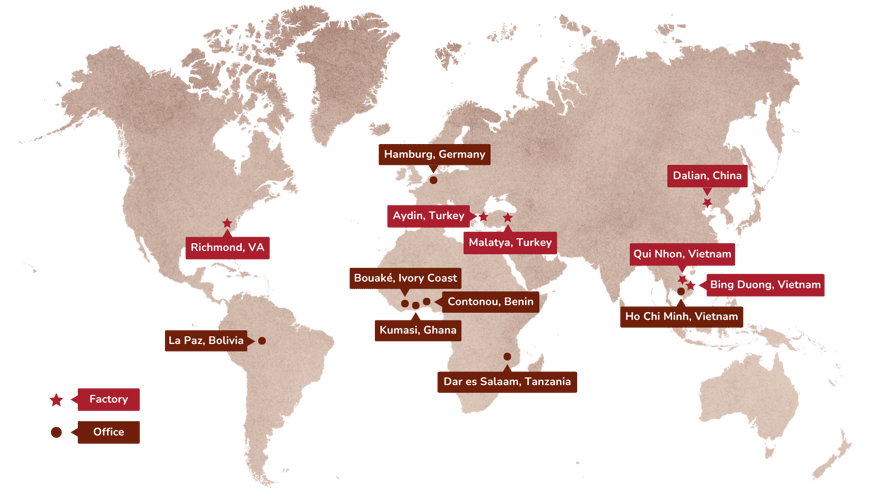
Our facilities are staffed by local teams with deep knowledge of regional agronomy, harvest logistics, and processing best practices. Having our own operations in-country means we control quality from the earliest stages, respond quickly to production or supply issues, and maintain the kind of supplier and community relationships that only come from long-term presence.
Sustainability Programs
Farmer Good Agricultural Programs
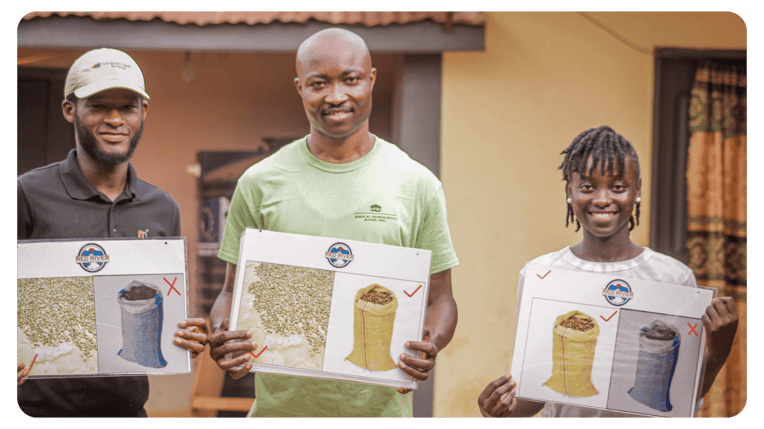
We work directly with the growers who supply our facilities, providing structured training in Good Agricultural Practices. These programs cover everything from soil health and input management to post-harvest handling and storage. These are the decisions that most directly determine both the safety and the quality of the raw material we purchase. By investing in grower knowledge and capability, we raise the baseline quality of what enters our supply chain and reduce the variability that creates problems downstream for our customers.
Village Savings and Loan Associations (VSLAs)
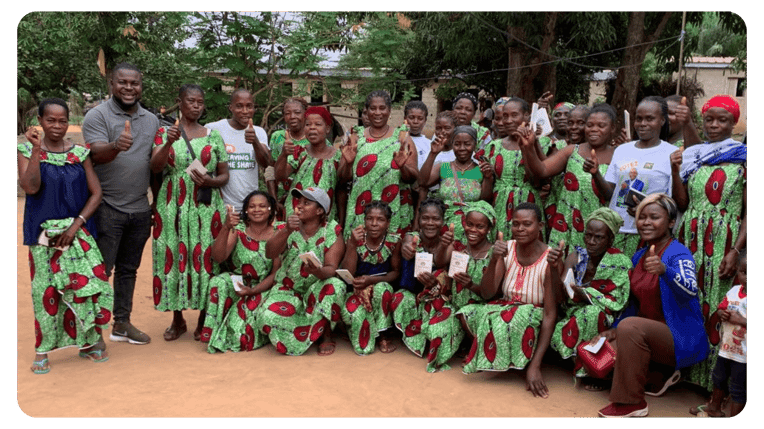
Economic stability at the farm level isn’t separate from supply chain stability, but rather foundational to it. Through Village Savings and Loan Associations, we help smallholder farming communities build access to financial resources that allow them to invest in their operations, manage risk across seasons, and reduce the economic pressures that can otherwise force short-term decisions harmful to quality or safety. Stronger farming communities produce better raw materials and represent more dependable, long-term supply partners.
Beekeeping Programs
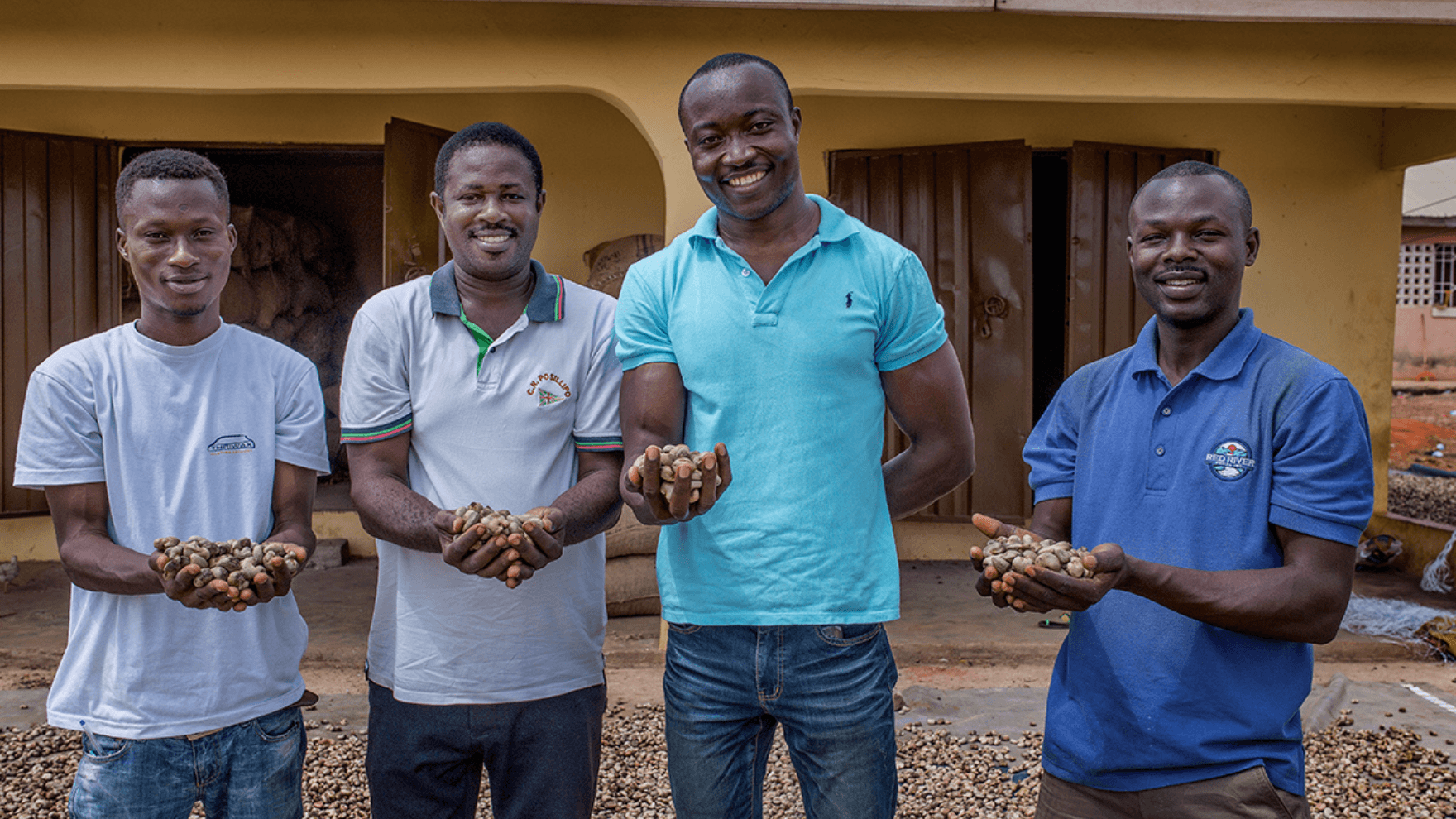
Our beekeeping programs support farming communities in maintaining healthy pollinator populations. This directly benefits cashew yields while also providing an additional income stream for participating farmers. It is an example of how investment at origin, done thoughtfully, creates compounding returns: for the ecosystem, for the farmer, and ultimately for the consistency and sustainability of our customers' supply.
.png?width=764&height=430&name=Red%20River%20Food%20beekeepers%20posing%20for%20a%20photo%20in%20Ghana%20(1).png)
Build on Investment, Not Transactions
Investing at origin is about more than presence. It is about accountability, partnership, and long-term thinking at every stage of the supply chain. At Red River Foods, this approach shapes how we operate every day. From our global facilities to our farmer programs, we are committed to building a supply chain that delivers consistency, transparency, and lasting value for our customers.
The strongest supply chains are not built from transactions, but from investment where it matters most.